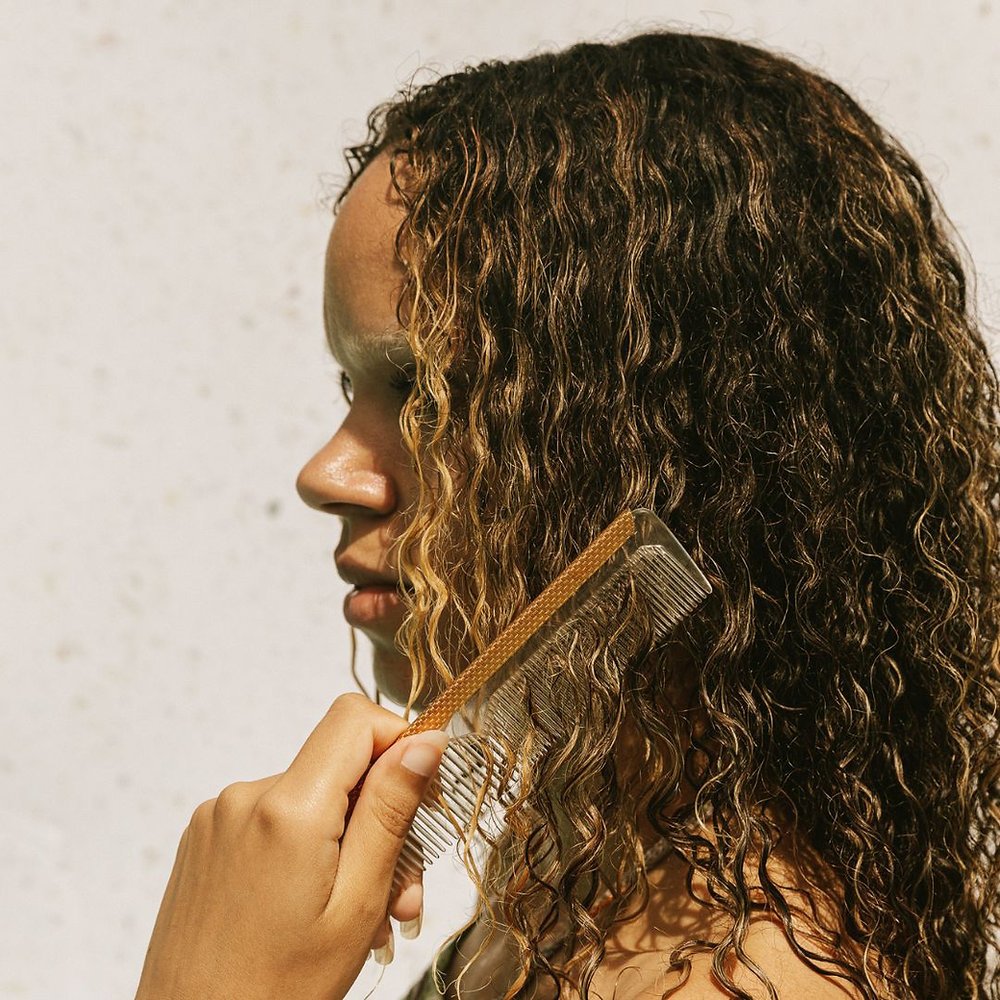
The moment your fingers snag, the comb resists, or your brush feels like it's ripping through precious strands – you know the struggle is real. Detangling curly and coily hair can often feel like a battle, leading to frustration, pain, and worst of all, breakage. But what if we told you it doesn't have to be a traumatic event? With the right Detangling Techniques for Curly & Coily Hair, you can transform wash day woes into a smooth, damage-free experience, unlocking the full potential of your beautiful texture.
It’s not just about what tools you use, but how you use them, and crucially, the environment you create for your hair before any detangling begins. Your curls, with their unique spiral structure and often-raised cuticles, are prone to knotting and friction. Understanding this inherent vulnerability is the first step toward a gentler, more effective detangling routine.
At a Glance: Your Roadmap to Damage-Free Detangling
- Prep is paramount: Never detangle dry hair. Fully saturate your hair with water and a generous amount of slip-enhancing conditioner.
- Section, section, section: Divide your hair into manageable sections before you even think about grabbing a tool.
- Start at the ends: Always work from the tips of your hair upward to the roots, untangling small knots as you go.
- Use the right tools: Fingers are always best for initial knot removal, especially for coily textures. Follow with a wide-tooth comb or a brush designed for wet detangling.
- Listen to your hair: If it hurts or feels like you're pulling, stop, add more product, and reassess your technique.
- Prevention is key: Proactive habits like protective styling and nighttime protection dramatically reduce tangles between washes.
Why Tangles Wage War on Your Curls
To truly master detangling, it helps to understand why curly and coily hair is so prone to tangles in the first place. It's not a conspiracy; it's physics and biology at play.
Your beautiful spirals create multiple contact points along each strand, making it easy for hairs to interlock and form knots. Unlike straight hair, the natural sebum (oil) your scalp produces struggles to travel down the curvy path of a curly strand, often leaving the mid-lengths and ends parched. Dry hair, with its often-raised cuticle layer, experiences increased friction, welcoming tangles with open arms. High porosity hair, in particular, with its more lifted cuticles, is especially susceptible.
The truth is, most breakage doesn't happen during styling; it occurs when tension is applied to stressed, dry, or unmoisturized hair during detangling. Curly hair is up to 50% weaker at its bend points, making these areas highly vulnerable. Forget the old wives' tale that detangling should be painful, or that brushing dry curls is effective – these misconceptions are direct routes to damaged hair.
Your Detangling Arsenal: Tools & Products That Deliver Slip
Having the right tools and products on hand is non-negotiable for a smooth detangling experience. Think of it as preparing your battlefield.
The Essential Tool Kit
- Wide-Tooth Comb: Your universal best friend. Ideal for all curl types, it's gentle and helps distribute conditioner without too much tension.
- Denman Brush (e.g., D3 7-Row Classic Styling Brush): A favorite for 3A-3C curl patterns. It excels at defining curls but can cause breakage if used too aggressively or on insufficiently wet hair.
- Tangle Teezer (The Ultimate Detangler): Excellent for quickly detangling 2A-3A hair, but its close-set bristles might snag or frizz tighter coils if not used with care and ample slip.
- Flexy Brush (e.g., Felicia Leatherwood Detangler Brush): A game-changer for 3C-4C hair. Its flexible bristles conform to the scalp and easily glide through dense curls, significantly reducing tension and pulling.
- Your Fingers: The most gentle and controlled tool, especially for 4A-4C textures. It's time-consuming but offers maximum control, allowing you to feel for knots and work them out delicately.
Products That Provide "Slip"
"Slip" is the magic word in detangling. It refers to how easily a product allows your fingers or tools to glide through your hair.
- Slip-Enhancing Conditioners: Look for ingredients like behentrimonium methosulfate, cetyl alcohol, and various quaternary compounds (e.g., polyquaternium-10). These provide a lubricating film on the hair shaft. Recommended: Kinky-Curly Knot Today (fine), Briogeo Don’t Despair, Repair! (medium), TGIN Honey Miracle Hair Mask (thick/coily), Aussie 3-Minute Miracle Moist (budget).
- Detangling Sprays: Excellent for quick touch-ups or adding extra slip during the process. Recommended: The Mane Choice Tropical Moringa Sweet Oil & Honey Endless Moisture Restorative Spray, Cantu Care for Kids Detangler.
- Oils and Butters: Essential for higher porosity hair, which needs more heavy-duty moisture and lubrication. Apply these before washing or as a pre-detangling treatment. Recommended: Mielle Organics Rosemary Mint Oil (medium), Camille Rose Cocoa Nibs & Honey Ultimate Growth Serum (heavy duty), Verb Ghost Oil (lightweight).
- Leave-in Conditioners: With ingredients like panthenol, glycerin, and aloe vera, these provide ongoing moisture and make subsequent detangling easier. Recommended: Pattern Beauty Leave-In Conditioner.
The key is that your chosen tool should glide through your hair without resistance. If it snags, you need more product or a different approach.
The Pre-Detangle Ritual: Setting Your Curls Up for Success
Think of this as your hair's spa treatment before the main event. Proper preparation can reduce detangling time by half and prevent significant damage.
- Pre-Detangling Oil (for medium to high porosity hair): If your hair is prone to dryness or has higher porosity, apply a generous amount of a natural oil (like olive, coconut, or jojoba) to your dry hair 15-30 minutes before washing. This creates a protective barrier, helps loosen existing tangles, and prevents the shampoo from stripping too much moisture.
- Lukewarm Water for Initial Rinse: Use water around 100°F (38°C). This temperature helps open the cuticle just enough to allow conditioner to penetrate effectively without overly stretching or shocking your strands.
- Generous Conditioner Application: This is where many go wrong. You likely need 2-3 times more conditioner than you think. Focus primarily on your mid-lengths and ends, where tangles are most prevalent and hair is driest. Don't skimp! For an economical option, try Garnier Fructis Curl Nourish conditioner.
- Saturation Time is Key: Allow the conditioner to sit in your hair for 3-5 minutes. This gives the product time to penetrate, soften the hair, and provide that much-needed "slip."
- Section Your Hair: This is perhaps the most critical step. Attempting to detangle your entire head at once is a recipe for disaster. Divide your hair into manageable sections—typically 4 for less dense hair, and 6-8 (or even more for very dense 4C hair) for thicker, more coily textures. Clip each section securely to keep them separate.
Severely Tangled Hair Pre-Treatment: An SOS Plan
For those times your hair feels like a bird's nest, try this intensive pre-treatment:
Mix equal parts a heavy conditioner (like a hair mask) and a penetrating oil (like olive or coconut oil). Apply this mixture generously to your dry, matted hair, ensuring every tangled section is saturated. Cover your hair with a shower cap and apply gentle heat (from a hooded dryer or by wrapping a warm, damp towel around the cap) for 20-30 minutes. The heat helps the products penetrate deeply, softening the tangles for easier removal.
Common Pitfalls to Avoid:
- Not Enough Product: The number one mistake. If your hair isn't literally slimy with conditioner, you don't have enough.
- Detangling Hair Not Fully Saturated: Dry or partially wet hair is far more prone to breakage. Ensure every strand is drenched.
- Sections That Are Too Large: Overwhelm leads to frustration and breakage. Smaller sections, especially for tighter curls, are always better.
Tailored Tactics: Detangling for Every Curl Type
Just as every curl is unique, so too should be your detangling approach. What works for a loose wave might be disastrous for a tight coil.
Wavy Hair (2A-2C): The Gentle Glide
Wavy hair tends to be finer and more delicate when wet, but can still tangle easily due to its S-pattern.
- The Wet Method is Best: Always detangle with thoroughly wet hair and ample, lightweight conditioner.
- Tools of Choice: A wide-tooth comb or a dedicated wet hair brush (like the Wet Brush Original Detangler) are ideal.
- Technique: Start at the very ends of your hair, gently working any small knots out. Gradually move upward, using long, smooth strokes. Hold the section of hair above where you're detangling with your non-dominant hand to minimize tension on your scalp and roots.
- Frequency: Wavy hair can be detangled after every wash or every 2-3 days to prevent buildup.
- Product Tip: Use a lightweight conditioner like Garnier Fructis Curl Nourish, ensuring it provides sufficient slip without weighing down your waves.
Curly Hair (3A-3C): Fingers First, Then the Brush
Curly hair often has more density and defined spirals, leading to more frequent tangles.
- Generous Slip is a Must: Drench your hair in a rich, slip-rich conditioner or detangling product.
- Section, Section, Section: Divide your hair into 4-6 manageable portions.
- Finger Detangling First: Always begin with your fingers. This allows you to gently feel for and separate larger knots without unnecessary pulling. Work from the ends to the roots, slowly.
- Follow with a Tool: Once finger-detangled, use a Denman brush (if you're careful) or a wide-tooth comb.
- "Tension and Release" Method: When you encounter a knot, don't yank. Apply gentle, consistent tension with your fingers or tool, and then release it slightly before trying again. Work the knot apart slowly rather than pulling through it.
- Frequency: Detangle once or twice a week, typically on wash day.
Coily Hair (4A-4C): Patience, Precision, and Plenty of Product
Coily hair is the most fragile and prone to extreme tangling due to its tight, often zig-zagging pattern.
- Smallest Sections, Heaviest Slip: Section your hair into 6-8 small sections, or even more for very dense hair. Apply a heavy, slip-rich conditioner, detangling cream, or even a mix of conditioner and oil to each section. You want your hair to feel incredibly slippery.
- Fingers are Non-Negotiable: For coily hair, finger detangling from ends to roots is not just recommended, it's essential. This is the only way to gently unravel the tightest knots without causing severe breakage.
- Hold at Mid-Shaft: While detangling a section, hold the hair at its mid-shaft firmly but gently. This absorbs tension and prevents pulling directly from the root.
- Small, Controlled Movements: Use tiny, precise motions. Work through one small knot at a time, patiently separating strands.
- "Twist and Detangle" Method: After you've detangled a section, apply a leave-in conditioner and lightly twist or braid it. This prevents it from re-tangling while you work on other sections.
- Frequency: Detangle once a week or less frequently, as excessive manipulation can lead to breakage.
- Product Tip: Use thicker curl creams and hair oils. Protective styles (like braids or twists) between wash days can drastically reduce tangles.
Wet vs. Dry: Choosing Your Detangling Battleground
The age-old question: wet or dry detangling? The answer isn't universal, but largely depends on your curl pattern and hair's specific needs.
Wet Detangling: The Curly Hair Standard
- Why it works: Hair stretches 30-50% more when wet, making it more elastic and pliable. This elasticity allows knots to loosen more easily.
- Best for: 3A-4C curl patterns, when tangles are extensive, during your regular wash routine, and when you have ample time.
- Requirements: Absolutely demands slip-enhancing products (conditioners, detangling sprays).
- Risks: Over-stretching wet hair can still cause damage if too much tension is applied, so gentleness is key.
Dry Detangling: A Niche Approach
- Why it might work: Less elasticity means less potential for over-stretching, which can be beneficial for very fine hair that's extremely vulnerable when wet.
- Best for: Primarily 2A-2C patterns, very fine hair, minor tangles that don't go deep, or as a pre-wash detangling step with significant oil/product.
- Requirements: If attempting, absolutely use a pre-detangling oil or a lightweight detangling spray to provide some lubrication.
- Risks: Without proper preparation, dry detangling can lead to significant breakage and pain due to the hair's lack of elasticity and increased friction.
For most curly and coily hair types, embracing the benefits of wet detangling with abundant slip is the safest and most effective strategy to avoid damage.
Beyond the Basics: Advanced Moves for Stubborn Knots
Sometimes, the standard approach isn't enough. These techniques can help when you encounter particularly stubborn tangles or want to ensure maximum length retention.
The "Slip and Slide" Method (for Severe Tangles)
When you hit a truly defiant knot, don't force it.
- Concentrate Slip: Apply an extra dollop of silicone-free slip agent (like a thick conditioner or detangling cream) directly onto the tangle.
- Hold Above: Gently hold the hair strand with one hand just above the knot.
- Slide and Loosen: With your other hand, gently slide your thumb and forefinger up and down the tangled area, trying to encourage the strands to separate.
- Single Finger Dissection: Once slightly loosened, introduce a single finger into the knot and gently rotate it, almost like you're unscrewing a tiny, intricate puzzle. This helps to carefully separate interlocking strands.
Two-Handed Tension Control
This technique is about distributing tension and preventing root strain.
- Anchor the Section: Hold the hair section you're working on firmly with your non-dominant hand, placing your fingers close to the scalp.
- Work from Ends Up: With your dominant hand, use your detangling tool to work from the ends upward.
- Counter-Tension: As you detangle, create counter-tension by gently pulling the section downward with your non-dominant hand while working the tool upward from the ends. This keeps the hair taut enough to detangle but prevents painful tugging on your scalp.
Directional Detangling
Your curls have a natural growth pattern – understanding it can make detangling smoother.
- Observe Your Curl: Pay attention to which direction your curls naturally spiral (clockwise or counter-clockwise).
- Follow the Flow: As you detangle a section, use twisting motions with your fingers or tool that follow the natural spiral direction of that specific curl pattern. This helps to gently unravel the curl rather than working against its inherent shape.
Rope Twisting (for Length Retention)
This is a protective measure after detangling a section.
- Detangle Thoroughly: Completely detangle a small section of hair.
- Apply Leave-In: Apply your chosen leave-in conditioner to the detangled section.
- Rope Twist: Gently twist the section in a rope-like fashion, following the natural direction of the curl pattern.
- Secure: You can secure the ends with a small elastic, or simply clip the twisted section to your scalp to prevent it from re-tangling with other sections while you finish your detangling session.
Detangling Under Duress: Special Circumstances
Life happens, and sometimes your hair faces unique challenges that require a modified detangling strategy.
Severely Matted Hair
This is the ultimate detangling challenge. Patience is your greatest ally here.
- Heavy Oil Application: Saturate the matted area with a generous amount of a penetrating oil (like olive or coconut oil) for 30-60 minutes. This helps lubricate and soften the hair.
- Conditioner & Spray Boost: Follow with a very heavy, slip-rich conditioner or detangling product, and then a detangling spray to further enhance slip.
- Outer Edges In: Start at the outer edges of the matted section with your fingers, gently working individual strands free. Gradually work your way inward.
- Tiny Sections: Once some strands are free, use the smallest sections possible.
- Fine-Tooth Comb (Last Resort): Only when the mat is mostly unraveled should you consider a fine-tooth comb for the very last stage, and with extreme caution. Expect this process to take 1-3 hours, or even longer. For more comprehensive steps, check out how to repair severely matted hair.
Post-Swimming
Chlorine and saltwater can be incredibly drying and tangle-inducing.
- Immediate Rinse: Rinse your hair thoroughly with fresh water as soon as you exit the pool or ocean.
- Chelating Shampoo: Use a chelating shampoo (designed to remove mineral buildup) if you've been in chlorinated water.
- Deep Condition with Protein: Follow with a deep conditioner, preferably one with some protein to help strengthen potential damage.
- Wet Method Detangle: Detangle using your standard wet method with a specialized wet brush or wide-tooth comb.
- Acidic Rinse: Consider a diluted apple cider vinegar rinse afterward to close cuticles.
Color-Treated/Chemically Processed Hair
Damaged or chemically altered hair is even more fragile.
- Protein-Enriched Conditioner: Opt for protein-enriched conditioners to help strengthen weakened strands.
- Smallest Sections: Work in even smaller sections than usual.
- Fingers & Wide-Tooth Comb Only: Avoid brushes, which can be too aggressive. Rely primarily on finger detangling and a wide-tooth comb.
- Cooler Water: Use cooler water during rinsing to help keep the cuticle closed.
- Detangling Primer: Consider a detangling primer specifically formulated for damaged hair.
Postpartum Hair
Hormonal shifts can cause shedding and tangling.
- Scalp-Soothing Pre-Wash: Use a pre-wash scalp treatment (e.g., peppermint or tea tree oil diluted in a carrier oil) to stimulate and soothe.
- Detangle Before Shampooing: Detangle before shampooing, when hair is at its most moisturized with conditioner, to minimize shedding during the wash.
- Shower Filter: Consider a shower filter if you have hard water, which can contribute to dryness and tangles.
- Protective Styles: Lean into protective hairstyles to minimize daily manipulation.
- Supplementation: Consult your doctor about biotin and iron supplements, which can support hair health.
Travel
New environments, different water, and disrupted routines can lead to tangles.
- Travel-Sized Essentials: Pack a travel-sized detangling spray and your trusty wide-tooth comb.
- Silk/Satin Pillowcase: Bring a travel-sized silk or satin pillowcase to protect your hair overnight.
- Maintain Protective Styles: If possible, keep your hair in protective styles while traveling to reduce exposure and tangling.
- Frequent Leave-Ins: Use leave-in conditioner more frequently to combat dryness from climate changes.
- Travel Humidifier: In very dry climates, a small travel humidifier can help your hair retain moisture.
Prevention is Power: Proactive Strategies to Tame Tangles
The best detangling session is one where there are hardly any tangles to begin with. By incorporating proactive habits, you can often reduce your detangling time by up to 70%.
- Nighttime Protection: Never sleep with your hair loose. Always protect it with a satin or silk pillowcase, bonnet, or head wrap. The "pineapple method" (gathering hair loosely on top of your head) is also excellent for preserving curls and minimizing friction.
- Strategic Washing: Wash your hair in sections, just like you detangle. Apply shampoo by gently smoothing it downward, rather than scrubbing vigorously, to prevent knotting.
- Regular Deep Conditioning: Consistency is key. Deep condition weekly for high porosity hair and bi-weekly for low porosity hair. Deep conditioners nourish and strengthen, making hair less prone to tangles.
- Protective Styling: Styles like twists, braids, and buns (worn for 2-3 weeks at a time) keep your hair contained and reduce opportunities for tangles to form. Just ensure they aren't too tight.
- Product Application: The "Praying Hands" Technique: When applying leave-in conditioners or stylers, use the "praying hands" method – smoothing your hands down your hair shaft, pressing the product into your strands rather than raking through, which can cause friction.
- Regular Trimming: Get your ends trimmed every 8-12 weeks. Split ends can travel up the hair shaft, causing more damage and making tangles worse.
- Minimize Heat Exposure: Excessive heat can dry out hair and lift cuticles, increasing tangles. Diffuse on a low heat setting or air dry whenever possible.
- Hydration, Inside and Out: Drink adequate water for internal hydration, and use humectant-rich products (like those with glycerin or aloe vera) to attract moisture to your hair externally.
By consistently implementing these strategies, you'll find easy ways to prevent tangles and make future detangling sessions significantly easier and faster.
My Top Picks: Products & Tools for a Smoother Journey
As a seasoned expert, I've seen countless products come and go. Here are some reliable performers that consistently deliver when it comes to gentle detangling and overall hair health:
Conditioners That Deliver Serious Slip
- Kinky-Curly Knot Today: An excellent leave-in/rinse-out for fine to medium curls, known for its incredible slip.
- Briogeo Don’t Despair, Repair! Deep Conditioning Mask: Fantastic for medium to thick hair, offering deep moisture and detangling power.
- TGIN Honey Miracle Hair Mask: A go-to for thick and coily textures, providing intense hydration and slip.
- Aussie 3-Minute Miracle Moist: A budget-friendly workhorse that offers surprisingly good slip for many curl types.
Leave-in Detanglers & Sprays
- The Mane Choice Tropical Moringa Sweet Oil & Honey Endless Moisture Restorative Spray: A lightweight spray that adds moisture and facilitates detangling.
- Pattern Beauty Leave-In Conditioner: A rich, creamy leave-in that provides lasting moisture and helps keep tangles at bay.
- Cantu Care for Kids Detangler: Not just for kids! This gentle spray is excellent for quick detangling and refreshing.
Oils and Serums for Added Lubrication
- Verb Ghost Oil: A lightweight oil that adds shine and smoothness without weighing hair down, great for finer textures.
- Mielle Organics Rosemary Mint Scalp & Hair Strengthening Oil: A versatile medium-weight oil that can be used for pre-poo, scalp treatments, or to seal moisture.
- Camille Rose Cocoa Nibs & Honey Ultimate Growth Serum: A heavier-duty serum for very dry or high porosity hair, excellent for sealing and adding slip.
Specialized Tools That Make a Difference
- Wet Brush Original Detangler: Perfect for wavy (2A-2C) and finer curly hair, designed to be used on wet hair without snagging.
- Denman D3 7-Row Classic Styling Brush: A classic for curly (3A-3C) hair, great for clumping and defining curls, but use with caution and plenty of slip.
- Felicia Leatherwood Detangler Brush: A standout for coily (4A-4C) textures, its flexible bristles gently glide through dense hair, minimizing tension.
- Tangle Teezer The Ultimate Detangler: A good universal option for many curl types, especially when you need quick detangling.
Garnier Picks from the Aisle
- Garnier Fructis Curl Nourish Shampoo and Conditioner: A fantastic duo for gentle cleansing and excellent slip for detangling.
- Garnier Fructis Curl Nourish Air Dry Curl Cream: Great for defining curls and adding moisture without heat.
- Garnier Fructis Curl Refresher Spray: For those in-between wash days to rehydrate and lightly detangle.
- Garnier Fructis Flexi-Hold Curl Defining Gel: To set your curls and minimize frizz, which can contribute to tangles.
Troubleshooting: When Detangling Doesn't Go As Planned
Even with the best intentions, you might hit a snag. Here's how to troubleshoot common detangling dilemmas. For more specific solutions, consider reading up on common detangling struggles.
Problem: Breakage Persists
- Solution 1: Assess Protein-Moisture Balance. Your hair needs both! Too much protein can make hair stiff and brittle; too much moisture can make it limp and weak. Do a simple strand test: stretch a wet strand. If it stretches a lot and doesn't bounce back, it needs protein. If it breaks quickly, it needs moisture. Adjust your products accordingly.
- Solution 2: Exclusively Finger Detangle. For 2-3 weeks, put down all tools and rely solely on your fingers. This gives you direct feedback on knots and forces a gentler approach.
- Solution 3: Add Bond-Rebuilding Treatments. Products like Olaplex No.3 can repair broken disulfide bonds within the hair, making it stronger and less prone to breakage.
- Solution 4: Check Water Quality. Hard water minerals can build up, making hair dry and brittle. Consider a shower filter.
Problem: Detangling Takes Too Long
- Solution 1: Invest in an Exceptional Slip Conditioner. Upgrade your conditioner to one renowned for its extreme slip.
- Solution 2: Pre-Detangle with Oil. Dedicate 15-30 minutes before your wash to generously coat dry hair with oil.
- Solution 3: Use an Efficient Detangling Brush. If finger detangling is too slow for your curl type, a flexible detangling brush (like the EZ Detangler or Felicia Leatherwood brush) can significantly speed up the process.
- Solution 4: Schedule Shorter, More Frequent Sessions. Instead of one long detangle, break it into two shorter sessions if your lifestyle allows.
- Solution 5: Allow Conditioner Saturation. Don't rush! Let the conditioner sit for the full 3-5 minutes.
Problem: Hair Tangles Immediately After Detangling
- Solution 1: Apply Leave-In Conditioner and Sealant. After detangling, apply a generous amount of leave-in, followed by a light oil or butter to seal in moisture and smooth the cuticle.
- Solution 2: Use "Curl Clumping" Technique. As you apply products, use your fingers to gently encourage curls to clump together, which minimizes individual strands from knotting.
- Solution 3: Consider a Curl Training Regimen. If your curls are prone to frizz and chaos, a structured regimen of styling and defining can help them stay organized.
- Solution 4: Anti-Humidity Products. If humidity is causing frizz and tangles, incorporate anti-humidity gels or sprays.
- Solution 5: Implement Nighttime Protection Religiously. This is crucial for maintaining detangled hair.
Problem: Pain During Detangling
- Solution 1: Pre-Detangling Scalp Treatment. A gentle scalp massage with peppermint or tea tree oil (diluted) can soothe and prepare the scalp.
- Solution 2: Use the "Flipping" Method. Bend at your waist, flipping your hair forward. Detangle in this position, as it reduces direct pull on the scalp.
- Solution 3: Scalp Massage. Before detangling, a light scalp massage can increase blood flow and reduce sensitivity.
- Solution 4: Consult a Dermatologist. If pain is chronic and severe, there might be an underlying scalp condition.
- Crucial Rule: Always hold the section of hair above where you're detangling. This absorbs tension and prevents pulling directly from the root, which causes pain.
Problem: Crown/Nape Area Severely Tangled
- Solution 1: Extra Product. Apply an extra dollop of conditioner or detangler to these specific areas first, letting it sit longer.
- Solution 2: Detangle These Areas First. Make the crown and nape your priority. Tackle them when you're freshest and your conditioner has had maximum time to work.
- Solution 3: Satin Scarf Liners. For the nape, use a satin scarf liner or tie a small satin scarf around your neck under your bonnet to prevent friction.
- Solution 4: Protective Styling. When styling, pay extra attention to neatly braiding or twisting the hair in these zones.
- Solution 5: Daily Lightweight Oil. Apply a very light oil to the ends of the hair in these areas daily to reduce friction.
Crafting Your Personalized Detangling Blueprint
There's no one-size-fits-all approach to perfect detangling. The key is to understand your hair and customize your routine.
Your Hair Assessment: Know Thyself
- Hair Porosity:
- Low Porosity: Hair floats in a cup of water. Needs more conditioner saturation time and lighter oils to penetrate.
- High Porosity: Hair sinks immediately. Needs protein-rich detanglers, heavier oils, and sealing products.
- Medium Porosity: Balanced.
- Curl Pattern (2A-4C): Tighter curl patterns (4A-4C) always require smaller sections and more emphasis on finger detangling.
- Density/Thickness:
- Low Density: Ponytail circumference less than 2 inches. May be fine with fewer, larger sections.
- High Density: Ponytail circumference greater than 4 inches. Absolutely needs more sectioning and generous product.
- Lifestyle Factors: How much time do you realistically have? This dictates your tool and product investment for efficiency.
Essential Practices to Build On
Regardless of your hair type, these practices are foundational:
- Always detangle in small, workable sections.
- Always start from the ends and work your way up to the roots.
- Always use adequate, slip-rich products.
- Always protect detangled sections from re-tangling.
- Always seal your detangled, moisturized hair with a leave-in and/or oil.
The Timeline to Perfection
Give your new routine time to work. Expect to:
- Perfect your routine: Allow 3-4 wash cycles to adjust products, tools, and techniques.
- Recover from damage: If you're addressing existing damage, anticipate 3-6 months to see significant improvement, especially with consistent preventative measures.
Signs You're on the Right Track
You'll know your routine is working when you observe:
- Significantly decreased hair in your tools and drain.
- Reduced detangling time and effort.
- Less breakage (you'll hear fewer snaps).
- Improved curl definition and less frizz.
- Less tangling between washes.
Reassess When:
Your hair isn't static. Reassess your routine when:
- You switch products or brands.
- Seasonal changes (e.g., dry winter air, humid summer).
- Major hair treatments (color, chemical processing).
- Changes in your hair's behavior (sudden dryness, increased breakage).
This personalized approach is your ultimate guide to managing tangles, ensuring you're always equipped for a healthy hair journey.
Your Journey to Happier Hair Starts Now
Detangling curly and coily hair doesn't have to be a dreaded chore. By understanding your unique hair type, arming yourself with the right tools and products, and committing to gentle, consistent techniques, you can transform the experience. Embrace the prep, master the touch, and lean into prevention. Your curls are a crown, and with these techniques, you'll ensure they remain healthy, vibrant, and beautifully free of tangles. Start today, and discover the joy of effortless, damage-free detangling.